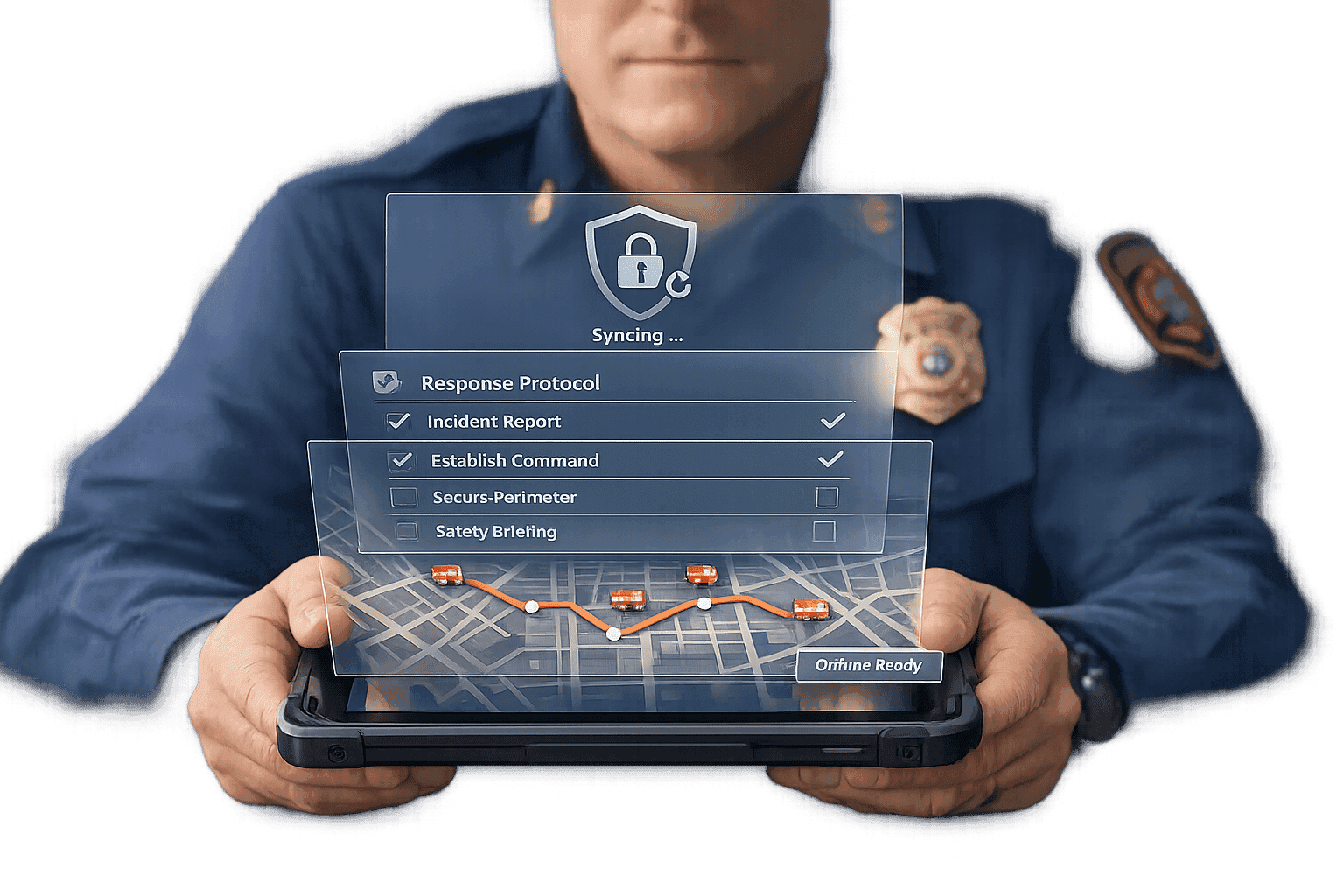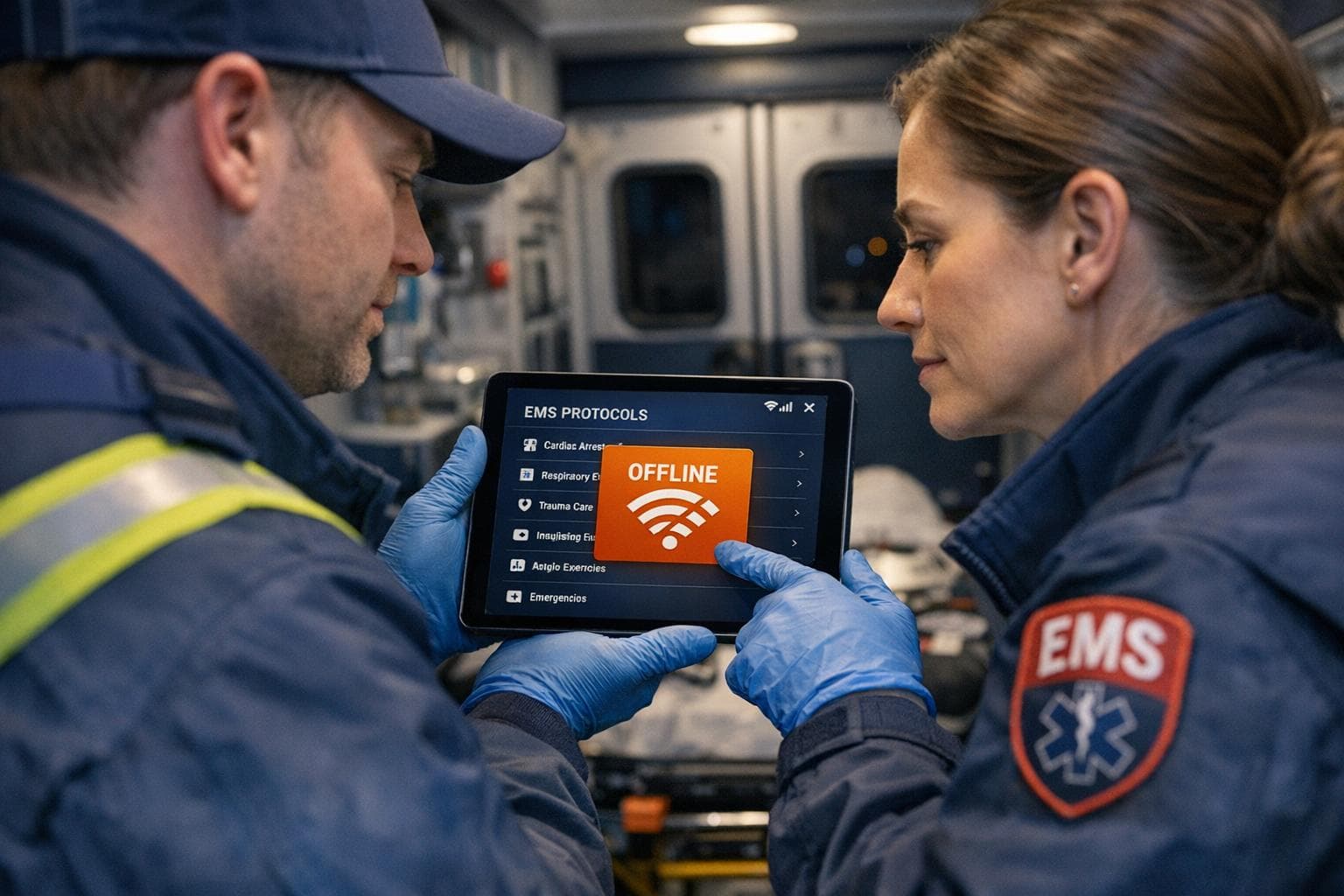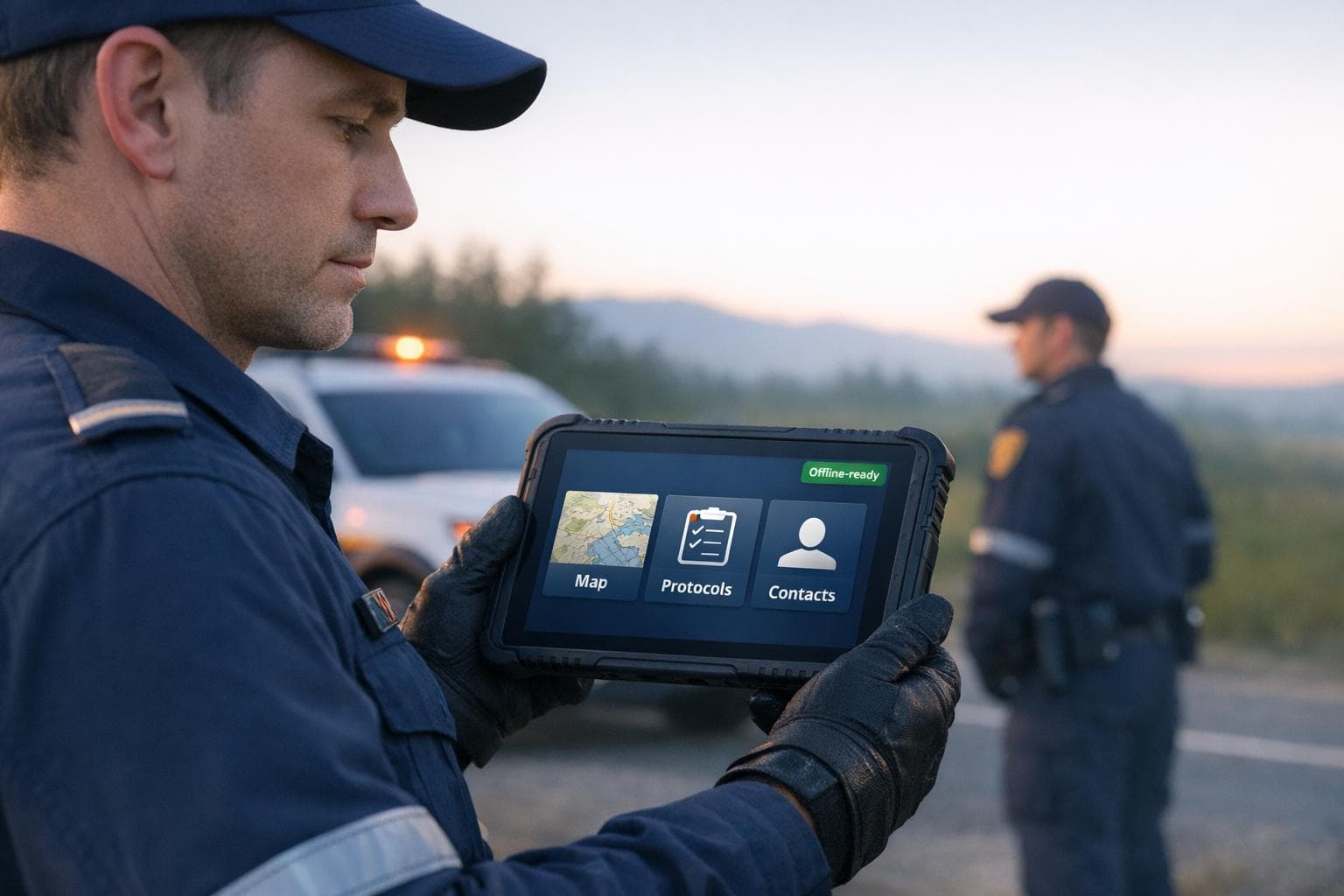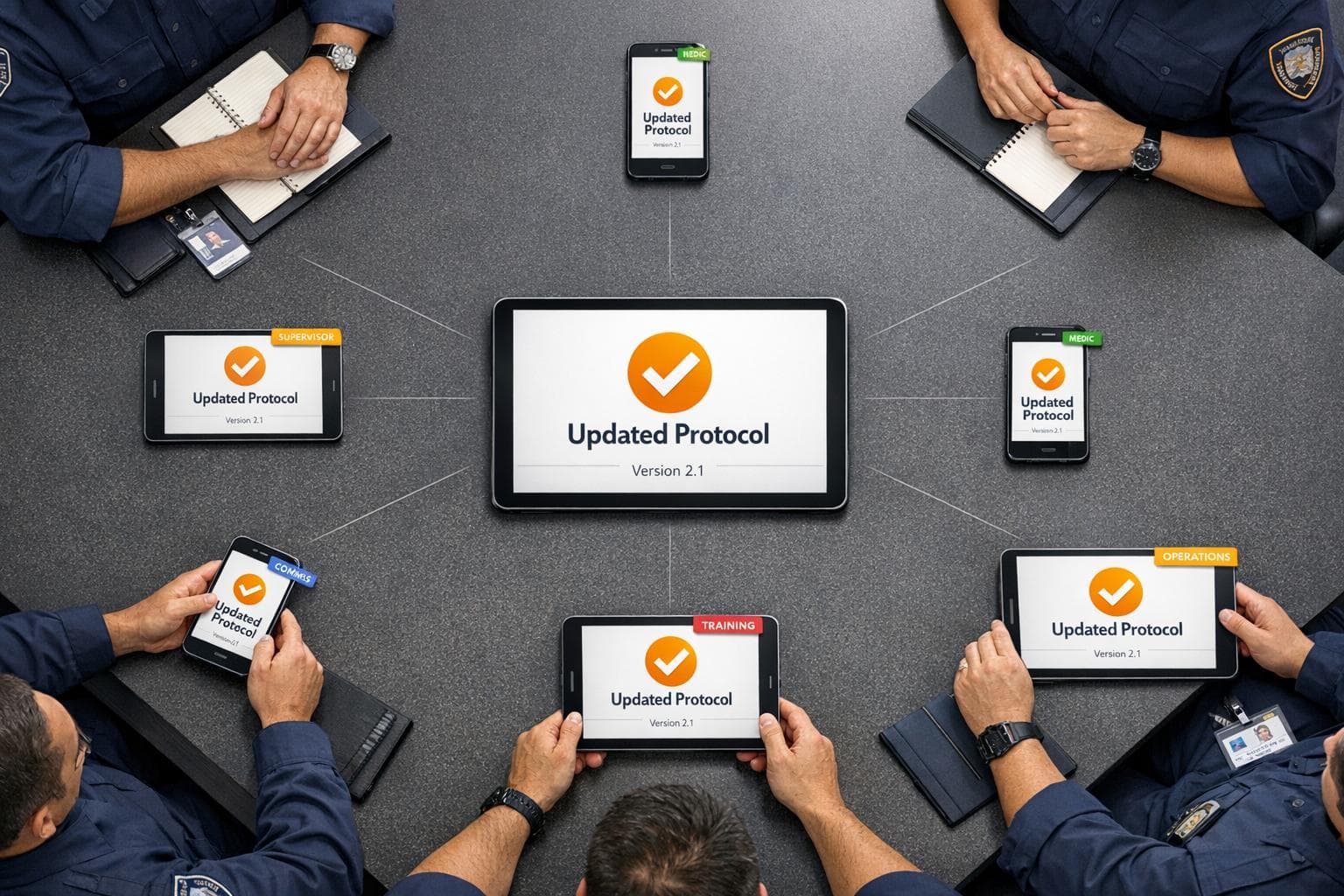
EMS protocol apps are transforming how emergency responders access critical information. These apps replace bulky paper manuals with fast, portable solutions that work even offline. Key features include:
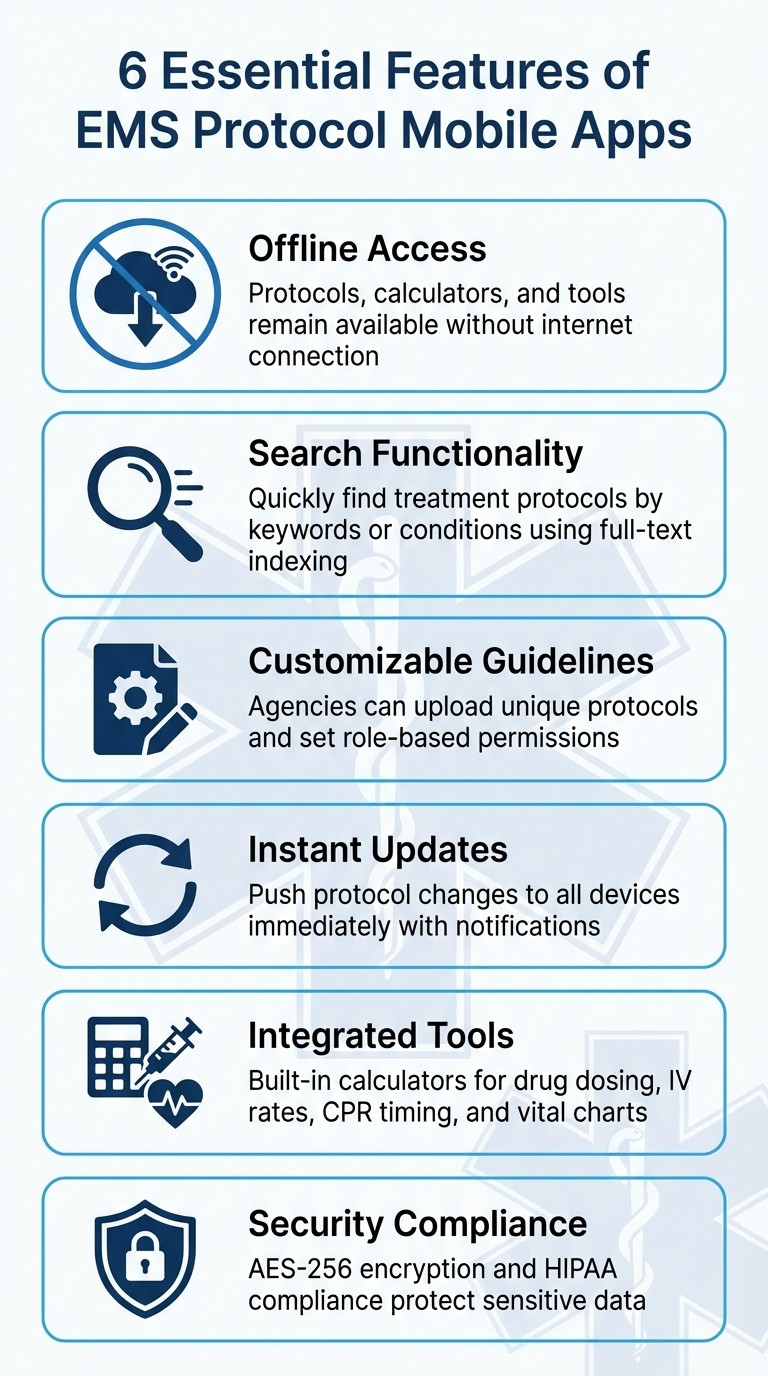
- Offline Access: Protocols, calculators, and tools remain available without internet.
- Search Functionality: Quickly find treatment protocols by keywords or conditions.
- Customizable Guidelines: Agencies can upload unique protocols and set role-based permissions.
- Instant Updates: Push protocol changes to all devices immediately.
- Integrated Tools: Includes calculators for drug dosing, IV rates, and CPR timing.
- Security Compliance: AES-256 encryption and HIPAA compliance protect sensitive data.
These tools improve decision-making during emergencies, reduce errors, and simplify administrative tasks by ensuring responders always have up-to-date, searchable protocols at their fingertips.
6 Essential Features of EMS Protocol Mobile Apps
Core Features of EMS Protocol Mobile Apps
EMS protocol apps are designed to support emergency responders in critical moments, whether they're in remote areas with no signal or handling high-stakes situations where every second matters.
Offline Access to Protocols
Cellular service isn't always reliable - think of basements, remote highways, or even certain hospital zones. EMS protocol apps address this by storing all protocol data directly on the device after the first download. This means medics can access the full protocol library, including medication calculators, treatment guidelines, and decision tools, without needing an internet connection.
For example, users can search protocols, calculate weight-based drug doses, or reference pediatric vitals charts even in areas with zero signal. Some apps even feature an Offline Mode toggle, preventing attempts to connect to unstable APIs during critical moments. This local storage approach ensures medics can make fast, informed decisions, no matter the conditions.
Real-Time Protocol Search
When time is of the essence, full-text indexing allows medics to quickly locate specific information within protocols. Unlike traditional methods that rely on document titles, this feature lets users search for any term - like contraindications, medication interactions, or equipment requirements - and get results in seconds. Advanced tools like keyword searches and tag-based filtering make it even easier. For instance, searching "STEMI" instantly brings up all related cardiac protocols, treatment pathways, and medication lists.
This functionality reduces the mental strain during emergencies. Instead of flipping through binders or trying to recall where information is stored, providers can simply type in a symptom or condition and get the answers they need. Combined with offline access, this feature ensures critical information is always just a tap away.
Customizable Guidelines and Role-Based Permissions
EMS agencies often follow unique protocols tailored to their region or medical oversight. These apps allow departments to upload their own treatment guidelines, standard procedures, and even employee handbooks. White-label solutions also enable agencies to maintain their branding while ensuring protocols align with local practices.
Role-based permissions add another layer of security and organization. For instance, administrators and medical directors can edit and update protocols, while field medics access read-only versions. This prevents unauthorized changes and ensures everyone works from the same up-to-date guidelines. Additionally, custom tags like "Cardiac" or "Trauma" allow medics to quickly locate vital information, streamlining response times.
Instant Updates and Notifications
Printed protocols can quickly become outdated, and replacing physical copies across an entire department can take weeks. EMS apps solve this by enabling administrators to push updates directly to all devices. Users receive notifications as soon as new guidelines are available, ensuring they always have the latest information on treatments and dosages.
Version control features also allow administrators to track changes, roll back to previous versions if needed, and maintain an audit trail. These tools support quality assurance and compliance, ensuring updates are both timely and well-documented.
Integration with Dispatch and Resource Systems
EMS protocol apps can connect with systems like Computer-Aided Dispatch (CAD), Electronic Patient Care Records (ePCR), and hospital Electronic Health Records (EHR) through cloud-based APIs. This integration streamlines the flow of information - patient vitals, medications, and treatment timelines can automatically populate ePCR forms, reducing manual data entry and minimizing errors.
Security and Compliance in EMS Protocol Apps
EMS apps handle highly sensitive information, including protocols and patient data, making strong security measures an absolute necessity. Alongside features like real-time updates and protocol management, secure data handling is critical. Without the right protections, agencies risk data breaches, unauthorized access, and failing to meet regulatory requirements. For those operating in the United States, compliance with federal healthcare laws is mandatory. This means encryption and strict adherence to regulations are non-negotiable.
Secure Data Encryption
To keep data safe, most EMS protocol apps rely on AES-256 encryption, a standard trusted by the military. This encryption protects data both when it's being transmitted and when it's stored. Whether it's protocol files, user credentials, or integrated patient data, this ensures information stays secure even if a device is lost or stolen. Data syncing between the app and cloud servers is further secured with TLS 1.2 or higher, preventing any interception during transmission.
For offline use, data is encrypted directly on the device, so protocols remain protected even without an internet connection. Agencies should verify that the app encrypts data both during transmission and while stored.
Benefits for EMS Teams and Administrators
EMS protocol apps offer practical advantages for both field responders and administrative teams. For those in the field, these apps provide quick access to vital information, while administrators benefit from streamlined updates and centralized control. Together, these features enhance patient care and improve operational efficiency.
Improved Efficiency in the Field
In emergencies, every second counts. Flipping through physical binders or outdated PDFs wastes precious time. Mobile protocol apps solve this problem by giving responders instant access to searchable, up-to-date guidelines. Paramedics and EMTs can quickly find the exact protocol they need, allowing them to focus on patient care instead of paperwork.
Even in areas without internet access, offline functionality ensures uninterrupted use. By typing in keywords, responders can immediately pull up protocols, medication details, or dosage guidelines. This ease of access reduces mental strain during high-pressure situations, helping teams make faster and more accurate decisions.
Simplified Administrative Management
For administrators, managing protocols the old-fashioned way - printing and distributing updates manually - was time-consuming and prone to errors. Digital platforms simplify this process by enabling centralized updates. A single protocol change can be pushed to all users instantly, complete with notifications.
Features like version control and rollback options add an extra layer of security. If a mistake is identified in a new protocol, administrators can quickly revert to the previous version while corrections are made. An audit trail keeps track of updates and approvals, making compliance reporting easier. Agencies can also customize the app with their branding, creating a polished and professional experience for their teams.
Better Organizational Readiness
These tools significantly improve an organization's readiness. With consistent access to current protocols, every team member can operate on the same page, regardless of their shift or location. Instant notifications ensure that updates reach everyone, eliminating gaps in preparedness.
Role-based permissions ensure that users only see the protocols relevant to their roles, from field responders to medical directors. This targeted access creates a more unified and responsive EMS operation, ultimately enhancing patient care and organizational efficiency.
Conclusion
Key Features Recap
EMS protocol apps are reshaping emergency services by offering essential tools that enhance efficiency and reliability. Offline access ensures medics can rely on protocols even in areas without cellular coverage or during large-scale emergencies when networks might be overwhelmed. With real-time search functionality and full-text indexing, finding critical information becomes a matter of seconds. Plus, instant updates mean no more relying on outdated paper manuals - protocol changes are pushed directly to all devices at once.
These apps go beyond just protocol access. They include specialized clinical tools like medication calculators, CPR metronomes, ACLS timers, and GCS calculators, all designed to reduce errors in high-pressure situations. HIPAA-compliant encryption and multi-factor authentication safeguard patient information, while NEMSIS v3.5 compliance ensures accurate reporting and helps avoid billing mistakes. By integrating with ePCR and CAD systems, these platforms cut down on redundant documentation, saving time both during and after calls. Together, these features create a strong foundation for modernizing EMS operations.
Final Thoughts on Implementation
By leveraging these advanced features, digital protocol platforms bring EMS operations into the modern age. They streamline fieldwork and simplify administrative tasks, leading to faster response times and better preparedness. When every team member has access to up-to-date, searchable protocols on their mobile devices, operations become more cohesive and effective.
For agencies, selecting platforms with robust offline capabilities, role-based permissions, and NEMSIS compliance is key. Regular training ensures that staff can confidently use the technology when it counts. Ultimately, digital protocol management speeds up decision-making, reduces mistakes, and leads to improved patient care.
FAQs
How does offline mode work during a call?
The ResponderOne app's offline mode ensures that responders can access essential resources even without an internet connection. How? By relying on pre-downloaded content. Once the department's resource library is downloaded, key materials like protocols, PDFs, contact information, and bookmarks are securely stored directly on the device.
This means responders can browse, search, and view resources anytime, anywhere - no Wi-Fi or data required. The only time internet access is needed is for the initial sign-in, downloading updates, or opening external links.
Who can edit protocols, and how are changes approved?
Authorized administrators have the ability to modify protocols. These updates are managed through role-based access controls, ensuring that only secure and approved changes are shared with responders. This system helps maintain both accuracy and security in the distribution process.