Outdated paper protocols slow down EMS teams and increase errors. Digitizing them can solve this by providing instant, mobile access to the latest guidelines, improving response times and accuracy. Here's what you need to know:
Why Go Digital? Paper protocols are cumbersome, prone to errors, and hard to update. Digital systems eliminate these issues, delivering real-time updates and tools like medication calculators.
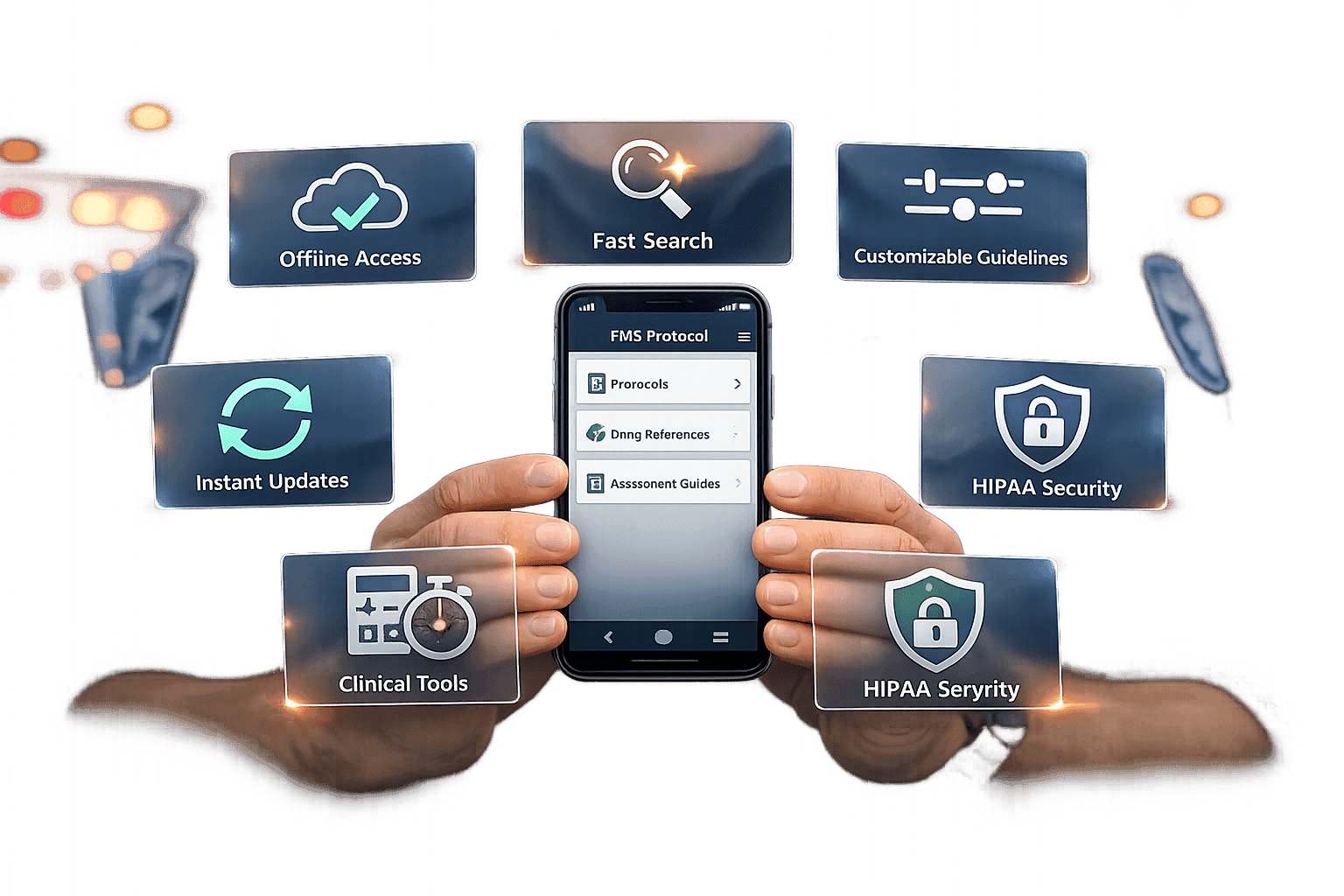
Key Features to Look For: Offline access, quick search functions, secure role-based permissions, and integration with existing systems (e.g., CAD, ePCR).
Implementation Steps:
Convert paper protocols into searchable digital files.
Set up secure access controls.
Train your team with hands-on simulations and ongoing support.
Compliance and Security: Use NEMSIS-compliant tools, protect patient data with encryption, and provide cybersecurity training.
Switching to digital protocols isn’t just about convenience - it’s about improving patient care and ensuring medics have reliable, up-to-date resources at their fingertips.
The Future of Evidence-Based Guidelines in EMS
Assess Your Current Protocol System
Take a close look at your current paper-based protocols. Many EMS agencies struggle with outdated manuals, missed updates, and multiple conflicting versions floating around. These inconsistencies can lead to delays during critical moments, medication errors, and uneven patient care.
Common Problems with Paper Protocols
Relying on paper protocols introduces several operational headaches that can directly impact performance in the field. Updating these manuals often turns into a logistical nightmare - requiring reprints and redistribution - which means medics might unknowingly use outdated versions. During emergencies, flipping through binders or scrolling through static PDFs wastes precious seconds. Alarmingly, nearly one in three prehospital medication doses is critically incorrect, particularly in pediatric cases. These errors, often caused by complex calculations under stress, are linked to over 100,000 adverse patient outcomes annually.
"One of the continuing problems in EMS is the lack of a standardized system, which makes it difficult to say that there is a magic pill for all EMS agencies."
– Edward Bauter, MBA, MHL, NRP, FP-C, Hackensack Meridian Health
Paper manuals also take up valuable space and are easily misplaced, which can shake medics' confidence when they need to make fast, accurate decisions.
Determine What Your Team Needs
Begin by identifying the gaps in your current system. Talk to your field teams and pinpoint the challenges they face during calls. Are they struggling to locate protocols quickly? Do medication calculations slow them down? How often do they find themselves working with outdated information?
Focus on solutions that address these issues. Features like instant access and searchability are key - your team should be able to find protocols, medication guidelines, and equipment details in seconds using intuitive keyword searches and interactive menus. Real-time updates are also crucial, allowing administrators to push out changes immediately.
Keep your field conditions in mind, too. A digital solution must work offline, function smoothly across different devices (phones, tablets, laptops), and handle the unpredictable nature of emergency situations. Role-based access controls can ensure users only see information relevant to their roles, while tools like weight-based medication calculators and age-specific vital signs can help minimize errors.
Document these needs now - they’ll serve as a roadmap for selecting and implementing the right digital platform for your team. With these requirements in hand, you’ll be ready to evaluate solutions that truly meet your agency’s demands.
Select a Digital Platform for EMS Protocols
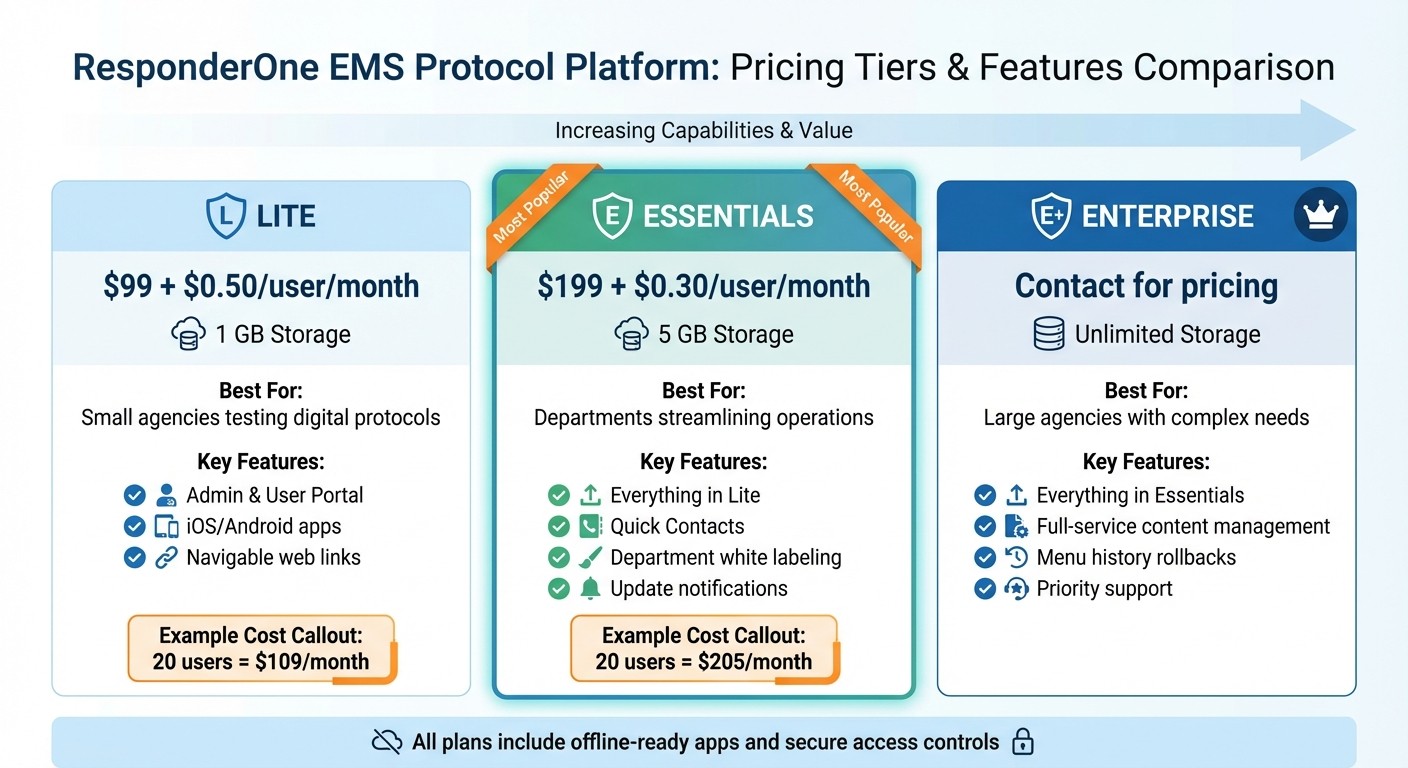
ResponderOne EMS Protocol Platform Pricing Plans Comparison
After identifying your team's specific needs, the next step is choosing a digital platform that eliminates common challenges like slow searches, outdated protocols, or unreliable access in the field. When evaluating options, focus on tools that enhance emergency operations rather than getting distracted by unnecessary extras.
Key Features for EMS Teams
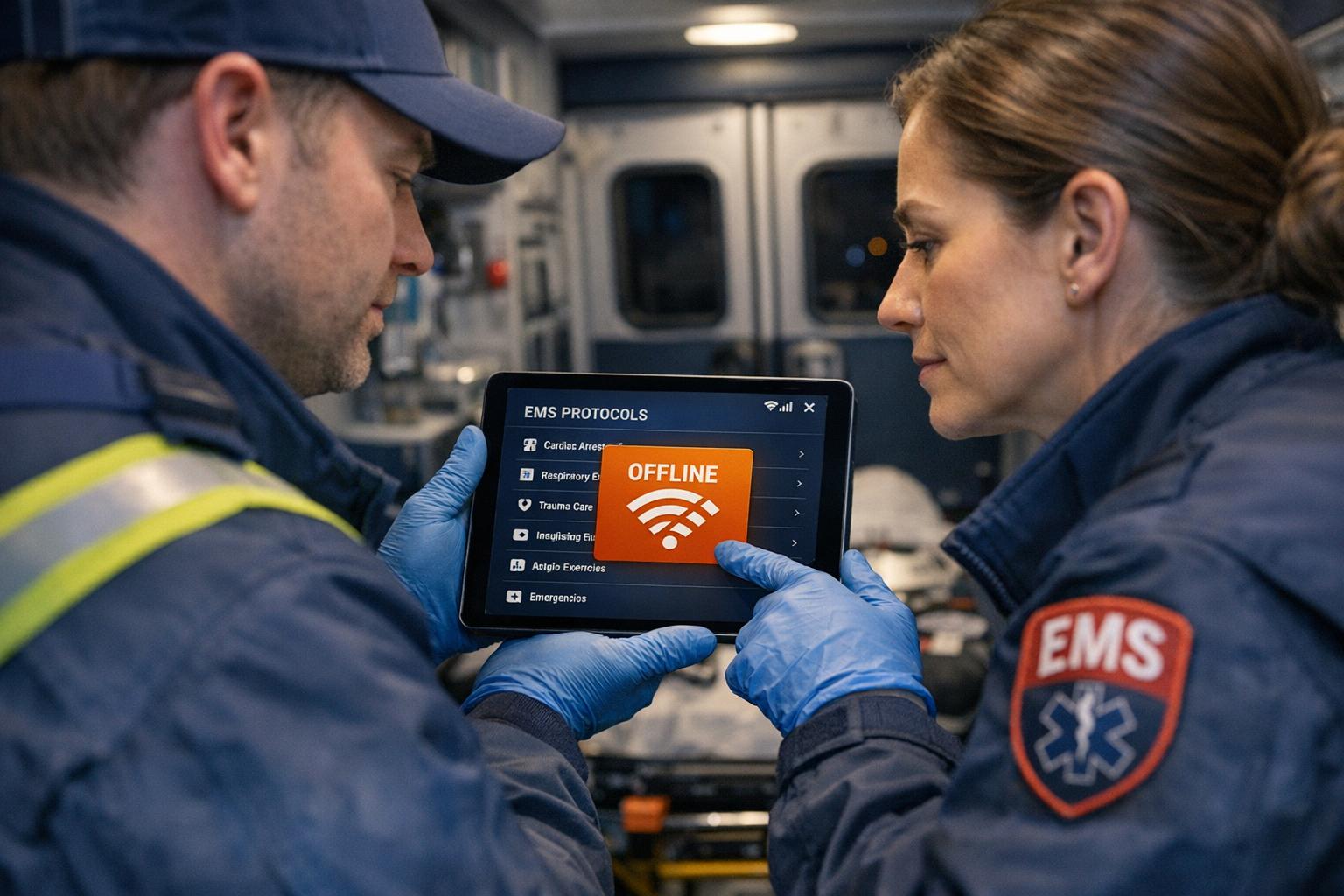
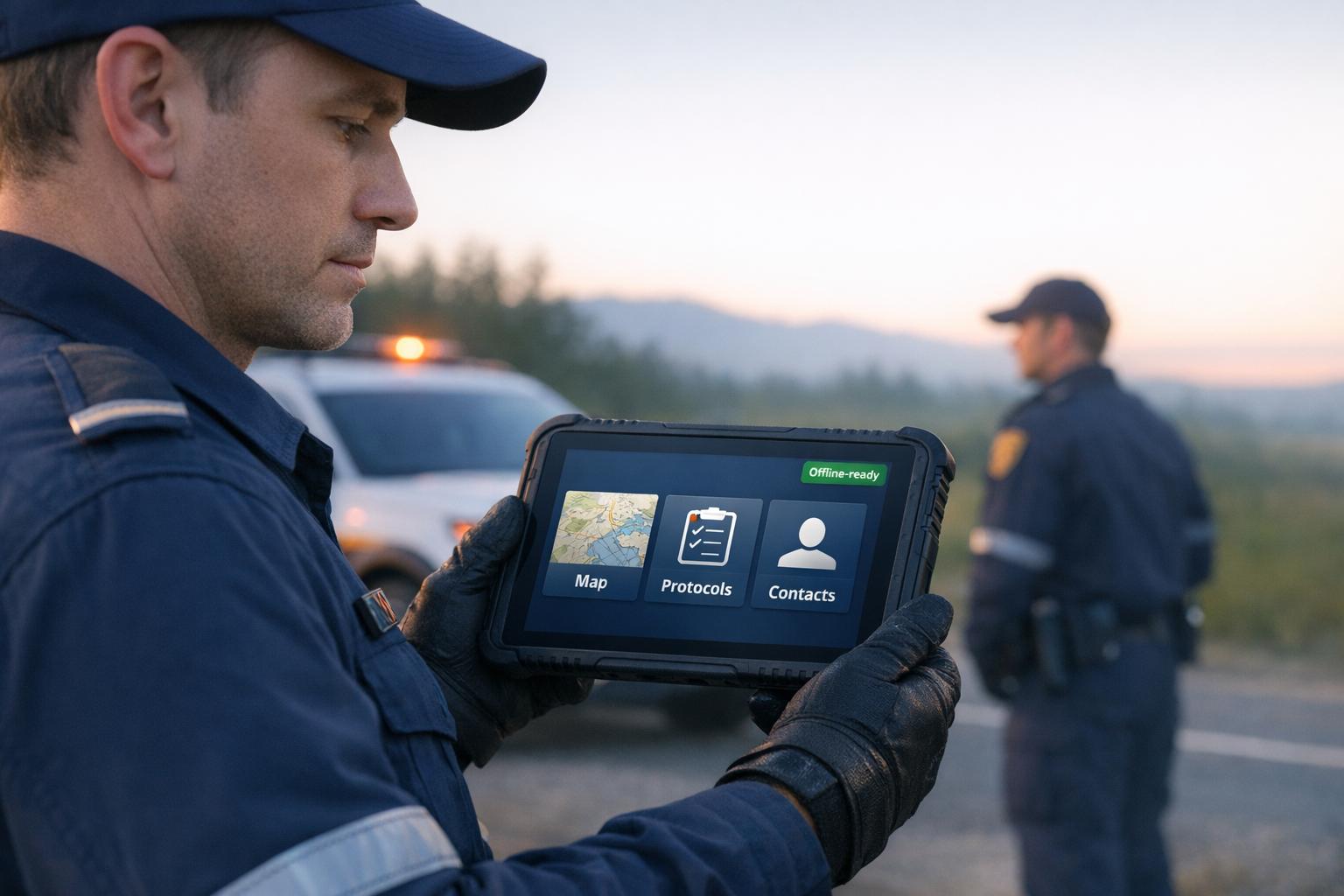
Start by prioritizing the must-haves. Offline access is non-negotiable. Your teams need to access protocols even in remote areas or during large-scale emergencies when cellular service is unavailable. A reliable platform should securely save data on devices and automatically sync updates once connectivity is restored. It should also work seamlessly across smartphones, tablets, and laptops.
A user-friendly interface with intuitive keyword searches is equally important. In high-pressure situations, the platform should reduce delays, not add to them.
Security is another critical factor. The platform must include strong encryption, multi-factor authentication, and role-based controls to meet HIPAA requirements. It should also ensure data accuracy by adhering to NEMSIS v3.5 standards, which helps prevent billing errors. Multi-factor authentication alone can block 99.9% of account breaches.
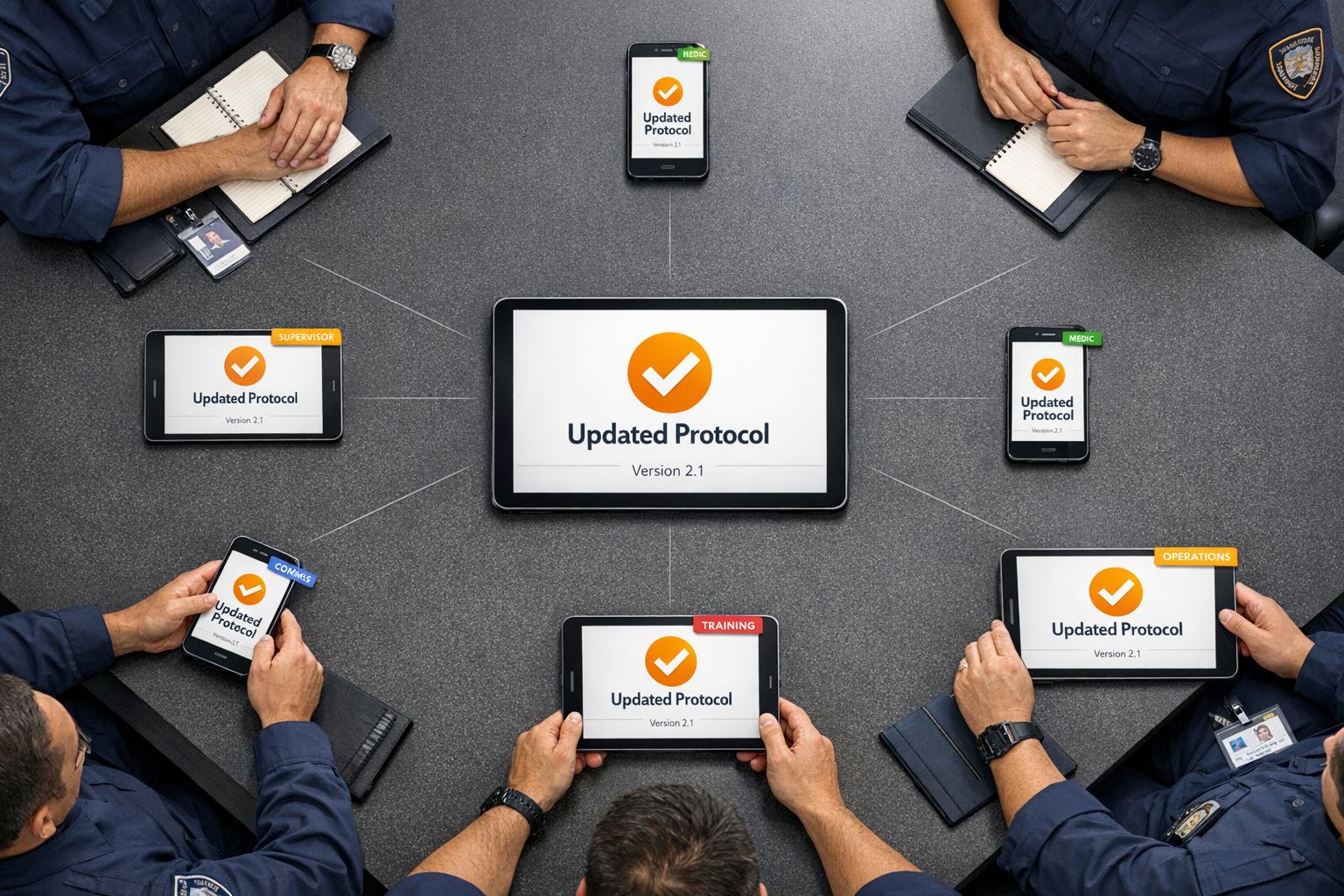
Administrators should be able to push updates instantly, ensuring all users are working with the latest protocols. Customizable templates with dropdown menus, checkboxes, and pre-filled fields can speed up documentation while reducing errors. Additionally, integration with Computer-Aided Dispatch (CAD) systems and hospital Electronic Health Records (EHR) streamlines data sharing, improving patient care and minimizing redundant work.
ResponderOne’s platform incorporates these essential features across its various pricing plans.
ResponderOne Pricing Plans
ResponderOne offers scalable solutions tailored to agencies of all sizes. Every plan includes essential features like offline-ready apps for iOS and Android, instant updates, and secure access controls. Higher-tier plans add advanced capabilities to support growing or complex operations.
Plan | Monthly Cost | Storage | Best For | Key Features |
|---|---|---|---|---|
Lite | $99 + $0.50/user/month | 1 GB | Small agencies testing digital protocols | Admin & User Portal, iOS/Android apps, navigable web links |
Essentials | $199 + $0.30/user/month | 5 GB | Departments streamlining operations | Everything in Lite, Quick Contacts, department white labeling, update notifications |
Enterprise | Contact for pricing | Unlimited | Large agencies with complex needs | Everything in Essentials, full-service content management, menu history rollbacks, priority support |
The Lite plan is ideal for small teams or agencies piloting digital protocols. For a 20-user team, the cost is $109 per month, providing a budget-friendly way to begin the transition to digital tools.
The Essentials plan is designed for growing teams. It adds features like department white labeling and update notifications, which become increasingly valuable as operations expand. For the same 20-user team, the monthly cost is $205. This tier also offers more storage and a lower per-user cost, making it a practical choice for scaling agencies.
The Enterprise plan is built for larger agencies with complex needs. It removes storage limits, offers full-service content management (handled by ResponderOne's team), and includes menu history rollbacks for auditing protocol changes. It also provides priority support to ensure faster resolutions during critical incidents.
When choosing a plan, think about your agency's current size and where you expect to be in the next 12–24 months. If you're managing multiple locations or anticipating growth, starting with the Essentials or Enterprise plan can save you the hassle of switching plans later. For teams with 50 or more users, the lower per-user rates in these tiers deliver meaningful cost savings compared to the Lite plan.
How to Implement Digital Protocols
Implementing digital protocols requires careful planning to ensure uninterrupted access to essential information. The objective is to transition seamlessly while keeping critical data readily available throughout the process. This approach supports the improved access and security measures highlighted earlier.
Step 1: Convert Paper Protocols to Digital Files
Start by digitizing your existing paper protocols. Scan them into searchable PDFs or convert them directly into digital formats. Organize these files into clear categories - like cardiac emergencies, trauma care, or medication guidelines - so they’re easy to find. Before uploading, verify that all content is up-to-date and aligns with your agency's most recent approved versions.
Step 2: Set Up Secure Access Controls
Establish role-based permissions to ensure that administrators can edit and distribute updates, while field medics access only approved, read-only versions. For instance, administrators should have full control to edit and push updates instantly to users. Meanwhile, medics in the field should work exclusively with finalized versions to avoid confusion.
Leverage tools like ResponderOne's Admin Portal to manage draft changes, collaborate on edits, and oversee protocol publishing. This centralized system ensures there’s a single, authoritative version of every protocol. To further protect sensitive data, implement multi-factor authentication across the board, keeping your system secure and HIPAA-compliant.
Step 3: Test Offline Access in Field Conditions
Run tests in offline, real-world scenarios to verify reliable protocol access. Have a team of medics use the platform during actual calls in remote areas to confirm its offline functionality.
For example, during a multi-vehicle accident in an area with no connectivity, medics successfully documented and later synced patient data without issues. Conduct similar tests to ensure that your team’s devices can securely store data offline and automatically sync it when back online. This step is crucial to guarantee your system performs effectively in the field.
sbb-itb-f1e5a35
Train Your Team on Digital Tools
To make the most of your digital conversion efforts, effective training is key. Every EMS professional must be equipped to use real-time protocol updates during emergencies. Without proper training, even the most advanced system won't deliver the desired results. Hands-on, clear training ensures your team feels prepared and confident when it matters most.
Create a Training Program
Develop a structured training schedule that thoroughly covers the features your team will use. Start by pinpointing the critical protocols and emergency response procedures that EMS personnel need to know inside and out. Understand how information flows within your organization - from administrators managing updates to medics accessing protocols in the field.
Your training should balance formal protocol details with practical, on-the-ground scenarios. Incorporate real-world examples to make sessions relatable and engaging.
Set up simulation labs where medics can practice deploying digital tools in controlled settings. Use high-fidelity simulations to prepare for complex situations, providing immediate feedback and focusing on high-stakes, low-frequency events like cardiac arrests or major accidents. Ensure your team trains on the same devices they'll use in the field to build familiarity and confidence.
Supplement learning with Smart Quizzes - quick, AI-powered knowledge checks that follow protocol updates. Attach resources like updated PDFs, training videos, and reference guides directly to these quizzes, and organize them in a dedicated "Training Resources" section on your platform. This approach keeps training content fresh and aligned with the latest medical guidelines and advancements.
"Continuous updating and validation - Ensuring that knowledge maps are regularly revised to incorporate new guidelines, medical advancements and lessons learned from real‑world incidents." – Chris Cebollero, DBA, Head of Operations for QuickMedic
Begin with pilot projects to refine your training methods. Establish clear performance metrics, such as improved response times or adherence to protocols, to measure success. Once pilots are successful, expand them under the oversight of steering committees to ensure proper governance and scalability.
"A deliberate implementation roadmap - including pilot projects, clear KPIs, infrastructure development, and clinician training - is critical for scalability and trust." – Edward Bauter, MBA, MHL, NRP, FP‑C, Hackensack Meridian Health
Once your training program is solid, the next step is seamlessly integrating the system into daily operations.
Get Your Team to Use the New System
After training, shift the focus to actively using the system during calls. Show medics how much time they can save by using search functions or interactive tables instead of flipping through bulky paper binders. When providers see how quickly they can access medication guidelines or equipment checklists, their resistance to change often decreases.
Conduct field tests to confirm the system's reliability and share the results with your team. Use shift briefings and post-call reviews to discuss how the digital tools performed during real incidents.
Introduce mentorship programs by pairing experienced medics who have mastered the system with those still learning. This peer-to-peer approach encourages natural knowledge sharing and complements formal training.
"Mentorship is a cornerstone of effective EMS training programs. Pairing newcomers with seasoned professionals facilitates transferring knowledge, skills, and experiences often not covered in formal training." – Dan Kramer, MPA, CFO, MIFireE, CFE, FSCEO
Encourage a collaborative culture where EMS personnel actively contribute insights and feedback to improve the digital platform. When medics see their suggestions lead to protocol updates, they feel a sense of ownership and engagement with the system. Regularly gather input from frontline responders to identify strengths and areas for improvement.
Provide ongoing support through refresher courses and advanced training sessions for new features. Flexible online continuing education, including video modules, quizzes, and case studies, helps your team maintain certifications and stay updated as protocols evolve. This commitment to continuous learning ensures compliance, operational efficiency, and readiness for whatever challenges arise.
Maintain Compliance and Protect Data
As you advance in your digital transformation, keeping regulatory compliance and safeguarding patient data should remain a top priority. Once your digital systems are in place, it's crucial to enforce these measures to maintain both operational integrity and patient trust. The National EMS Information System (NEMSIS) sets the national data standard for how EMS patient care information is collected, documented, and shared across the U.S.. Compliance isn't just about meeting regulations - it establishes a standardized framework that helps agencies track trends, evaluate performance, identify public health risks, and guide evidence-based policy decisions. This structure complements your digital systems, ensuring they operate efficiently while maintaining data accuracy.
Meet NEMSIS ePCR Standards
To stay compliant, you’ll need a NEMSIS-certified ePCR system that is regularly updated. These systems capture essential details like patient demographics, care provided, incident specifics, crew identifiers, and outcomes. Keep in mind that individual states often add their own requirements to the federal standard, so confirm what applies in your location.
"The simplest and most effective approach is to use an ePCR system from a NEMSIS-compliant vendor." – First Due Media Team
NEMSIS standards are updated frequently, typically once or twice a year, with agencies given about a year's notice to implement changes. For instance, Texas adopted NEMSIS version 3.5 in late 2023. The current version, 3.5.1, introduces new fields for community paramedicine and mobile integrated health encounters. Using a system that automatically incorporates these updates ensures you stay ahead. The NEMSIS Technical Assistance Center (TAC) won’t accept data from states using software that hasn’t passed compliance testing.
Beyond meeting federal standards, establish consistent data submission practices. This might include monthly run reports and submitting National Run Data (NRD) forms when required. If you rely on a third-party service, such as a billing agency, for data submissions, ensure you have an updated Business Associate Agreement (BAA) signed by both parties, and ensure it’s no older than five years.
Manage Updates and Prepare for Audits
Once your protocols are updated and your team is trained, the next step is ensuring strong data security and audit readiness. Protecting patient data is key to maintaining trust, adhering to HIPAA standards, and delivering quality care. EMS agencies handle highly sensitive information, which makes them attractive targets for cyberattacks like ransomware, phishing, and data breaches. For example, a paramedic in Florida received a six-month jail sentence for taking unauthorized "selfies" with patients, while an EMS provider in Oklahoma faced a $90,000 fine after a ransomware attack exposed gaps in their compliance risk analysis.
To secure your digital systems, enforce rigorous security protocols. Require complex passwords that are updated regularly, encrypt data both at rest and in transit, and implement multi-factor authentication (MFA) for all remotely accessible accounts. Limit access to sensitive information to only those who need it, and conduct regular audits to review access permissions. The U.S. Department of Health and Human Services (HHS) is proposing major updates to the HIPAA Security Rule, including mandatory encryption of electronic PHI and annual risk assessments.
Organize your digital protocols to align with the NEMSIS standard, making it easier for staff to quickly find information and simplifying audits. Use a platform that allows you to modify or disable protocol sections as needed to reflect operational changes or medical director directives. Keep regular data backups, store them offline for added security, and have a recovery plan ready in case of emergencies. Conduct routine audits of your data management processes, staff training programs, and physical security measures.
Provide mandatory cybersecurity training for all EMS staff. This should cover recognizing phishing attempts, managing secure passwords, handling data responsibly, and logging out of systems properly. Train your team to identify and protect PHI (Protected Health Information) and PII (Personally Identifiable Information). Establish clear rules for sharing information, including guidelines for texting, taking photos, sharing PHI with other healthcare providers, securing mobile devices, and disposing of PHI securely. By ensuring your team understands compliance and security protocols, your digital systems can become a powerful tool rather than a regulatory challenge.
Conclusion
Switching to digital EMS protocols can revolutionize prehospital care by making it faster, more accurate, and fully compliant. Moving away from paper-based systems eliminates outdated practices, reduces confusion, and ensures your team always has access to up-to-date information - especially when every second counts.
By following a clear process - assess, select, implement, train, and maintain - you can turn static paper documents into dynamic, searchable digital tools. This shift not only reduces errors but also improves patient care outcomes by providing instant access to critical information.
"For field providers, it means confidence that every protocol is current, relevant, and agency-specific. For leadership, it means improved compliance, faster updates, and stronger communication across the team." – Handtevy
FAQs
How does switching to digital protocols help EMS teams respond faster?
Switching to digital protocols enables EMS teams to respond more quickly by offering immediate access to the latest procedures. Instead of wasting precious moments searching for critical details, medics can retrieve the information they need in an instant. This streamlining allows them to focus entirely on what matters most - caring for patients instead of shuffling through paperwork.
Digital tools also enhance field coordination by enabling seamless communication and real-time updates. With everyone on the same page, teams can work more efficiently, ensuring emergency care is delivered promptly and effectively when it’s needed the most.
What should EMS teams look for in a digital protocol platform?
When selecting a digital protocol platform, prioritize features that improve daily operations and support long-term goals. Key aspects to consider include smooth workflow integration, secure data handling, and offline functionality to ensure protocols remain accessible, even in remote locations.
An intuitive interface is crucial for easy adoption by both medical staff and administrators. Additionally, real-time data access and tools for maintaining compliance play a vital role in upholding safety standards. Lastly, choose a platform that can grow with your EMS organization, adapting to future demands and changes.
What steps can EMS agencies take to ensure data security and compliance when switching to digital protocols?
EMS agencies can safeguard sensitive information and ensure compliance by implementing strong cybersecurity practices. This means encrypting data both when stored and during transmission, keeping software up to date, and utilizing multi-factor authentication to control access effectively. Equally important is training staff on cybersecurity protocols and having a well-defined incident response plan ready to handle potential breaches.
For compliance with regulations like HIPAA, agencies must emphasize data privacy, enforce secure data handling procedures, and maintain audit trails to monitor access and modifications. These steps not only protect crucial information but also help foster trust among team members and the communities they serve.